

I was saddened to learn that Bob Ellis recently passed away. I keep thinking about the second time we met.
I did not go to an office. We met at his garage. He handed me a box of one-off CDs and said, more or less, turn this into a product. It wasn't just a box. He was handing me the steering wheel.
No onboarding. No committee. Just trust, and I learned quickly it wasn't about speed; it was about owning the outcome. It was my first startup, and my first time taking a product from 0 to 1.
Bob ran Compact Publishing, best known for the TIME CDs. When I say “we,” I mean around twelve people at the company’s peak. Bob hired me to build the Windows version, but that first year, it was just me coding. In a place that small, if something shipped, it was because you made it ship. Eight months later, I shipped my first title. I'd made the system data-driven without being asked, which let us ship my second a month later.
These sold tens of millions of copies. I could walk into big-box stores and see them in the software aisle. One Apple bundling run alone was seven figures. We got pennies per copy, which tells you the volume we were doing.
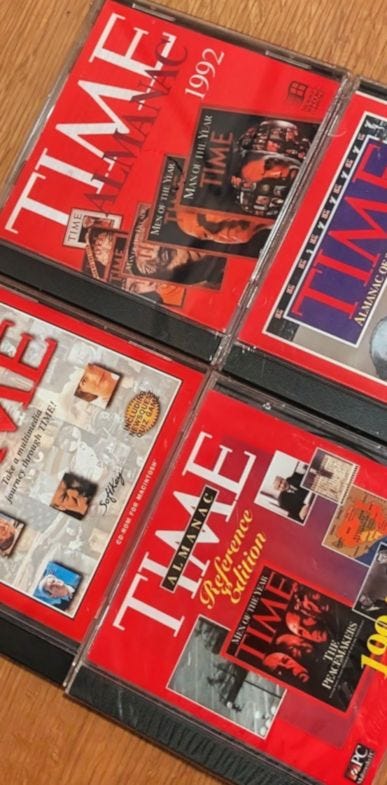
Up until then, I had worked at big companies where ownership gets diluted across layers. Bob did the opposite. He made us feel like the work was ours, in the way that matters day to day: responsibility, agency, and pride.
Bob trusted you to change the system if you could see a better way. I pushed us toward SGML markup because I’d spent the previous few years at IBM building SGML tooling and saw the fit. Hugh Matlock implemented it, and we shipped our own markup as plain-text files that are still sitting on the discs. Anyone with a copy can open them and see exactly how it worked.
Hugh also did many other remarkable things. One that stands out was adding IDs to tags so content became addressable in code, something we shipped before we had heard of HTML, and long before the web standardized a DOM. Mike Bradshaw ran with this and used those tools to build experiences people later associated with "dynamic web" interfaces. Hugh's insight made all that possible, and Bob's culture made it normal.
You would mouse over one element, and a plane from the other side of the screen would roar into view. A frosted-glass pop-up would crossfade with stats. It looked like a single seamless screen, but under the hood, there was an array of multimedia choreographed by our markup. That's ordinary today, but this was BEFORE NETSCAPE, and IMO came about because of the environment Bob fostered. It felt like the future because, in a small way, it was.
Compact was acquired by The Learning Company (SoftKey), but the part I keep coming back to is this: Bob trusted people and gave them room to innovate. That trust shaped me. It became my north star. I am at my best when I can make a difference, not just execute.
I owe him more than I ever told him. I wish I had.
Thank you, Bob.