

In 1987, I was writing software for the Xerox 6085, a networked workstation based on the Star. It had a graphical desktop and REAL email over ARPANET, and cost more than a car. Most people hadn't seen a mouse. I was building graphics software on a 19-inch monitor that doubled as a space heater. I was in my twenties. I didn't know I was building the future.
The development environment was Smalltalk-80. Fully interactive, object-oriented, years ahead of anything the industry would adopt. You could inspect any object, modify it live, and build widgets on the fly. I remember a guy from PARC showing me his spreadsheet where the cells could hold images, and the operations were blend modes. Add or subtract two images, manipulate them like numbers. This was Photoshop before Photoshop existed.
A marketing guy kept sneaking into my area, trying to get me to build him a demo to pitch the system to a Middle Eastern embassy. The machine could render right-to-left text natively. That was exotic in 1987. He smelled a sale. Management was not amused.
They had the future sitting on every desk in the lab, and they were still thinking about copiers. I was thinking about spatial indexing and how to make a map draw faster, not revolutions. But even I could see it. The marketing guy saw it. The people whose job it was to see it were looking the other way. That's not just a Xerox story. That's the story.
Every major platform shift since has felt the same way. A handful of people see it. Then it becomes the floor you're standing on.
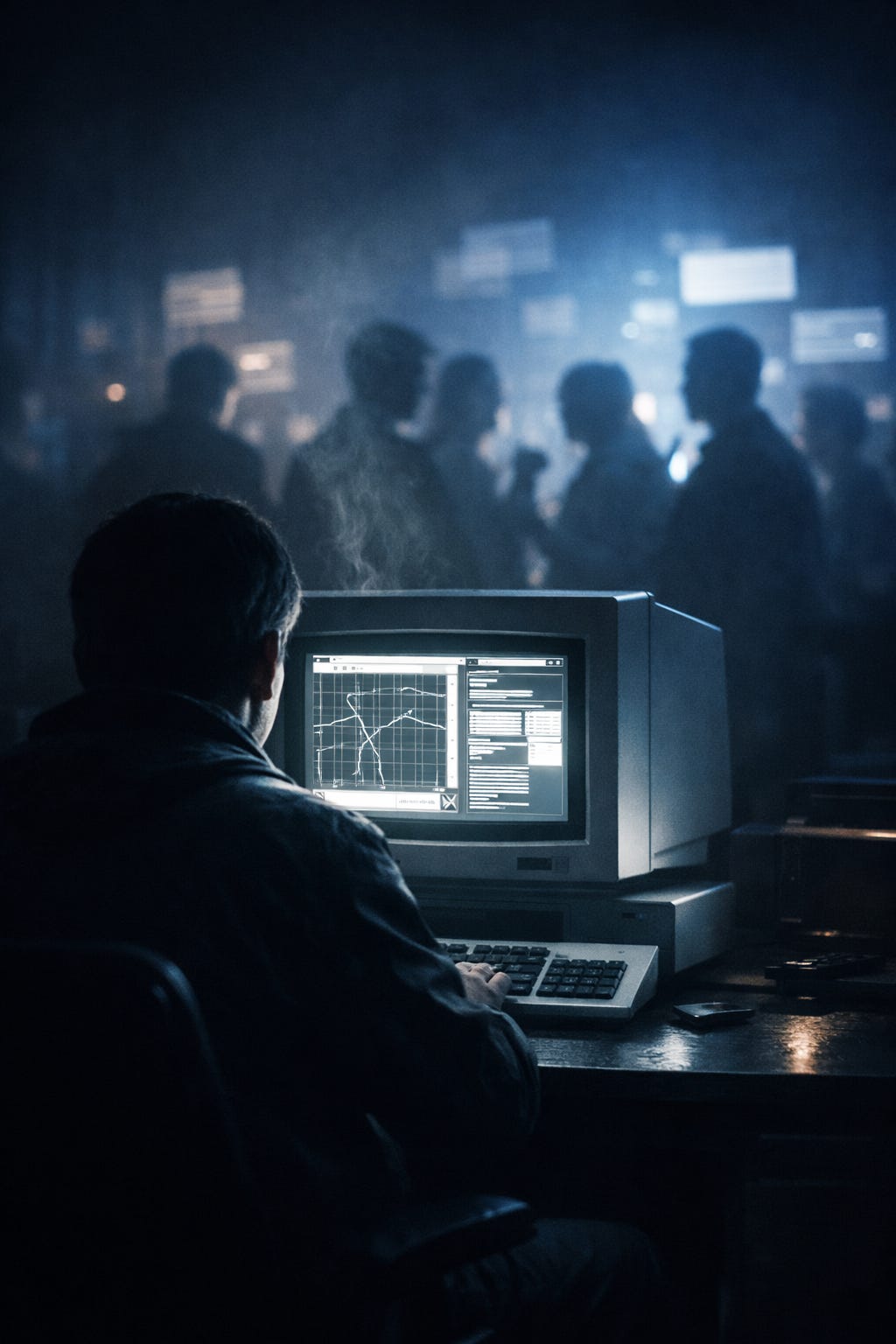
We're in one of those moments again. The floor is shifting. I know because I'm standing on it. In 1987, the democratization of the interface made computers accessible to millions. Now it's the democratization of software development itself.
I build with AI every day. It's fast, especially with boilerplate. Build me a website. That's not magic, that's a simple and well-understood problem done at extraordinary speed. But that speed changes something fundamental. The cost of trying a hunch has collapsed.
The hard part is everything else. Any serious work is a thousand-bound problems that need to fit together. The AI can solve any one of them. But it doesn't know which ones matter, how they connect, or where the weight is. Three weeks before a game launched, I was handed the requirements for a matchmaking system capable of handling 100 million players. I projected the criteria into a single dimension and repurposed an existing leaderboard service. That intuition comes from experience and made an impossible task possible.
I spend hours before the tools touch anything serious. Decomposing, sequencing, and finding the load-bearing walls. That's the work. The rest is fast. You can't outsource the thinking without first doing the thinking.
All this has happened before. I hear the melody. It was on vinyl the first time. I'm not waiting around for the chorus. The needle has dropped. Again.