

They weren't losing. They were leaving.
SpellBurst went live on Google Play on October 12. Within days, I saw something I hadn't expected. In a small early sample, about a third of players who finished the tutorial made it most of the way through level 1, then quit with moves remaining.
My hypothesis was that I was asking people to stay too long before giving them the satisfaction of finishing.
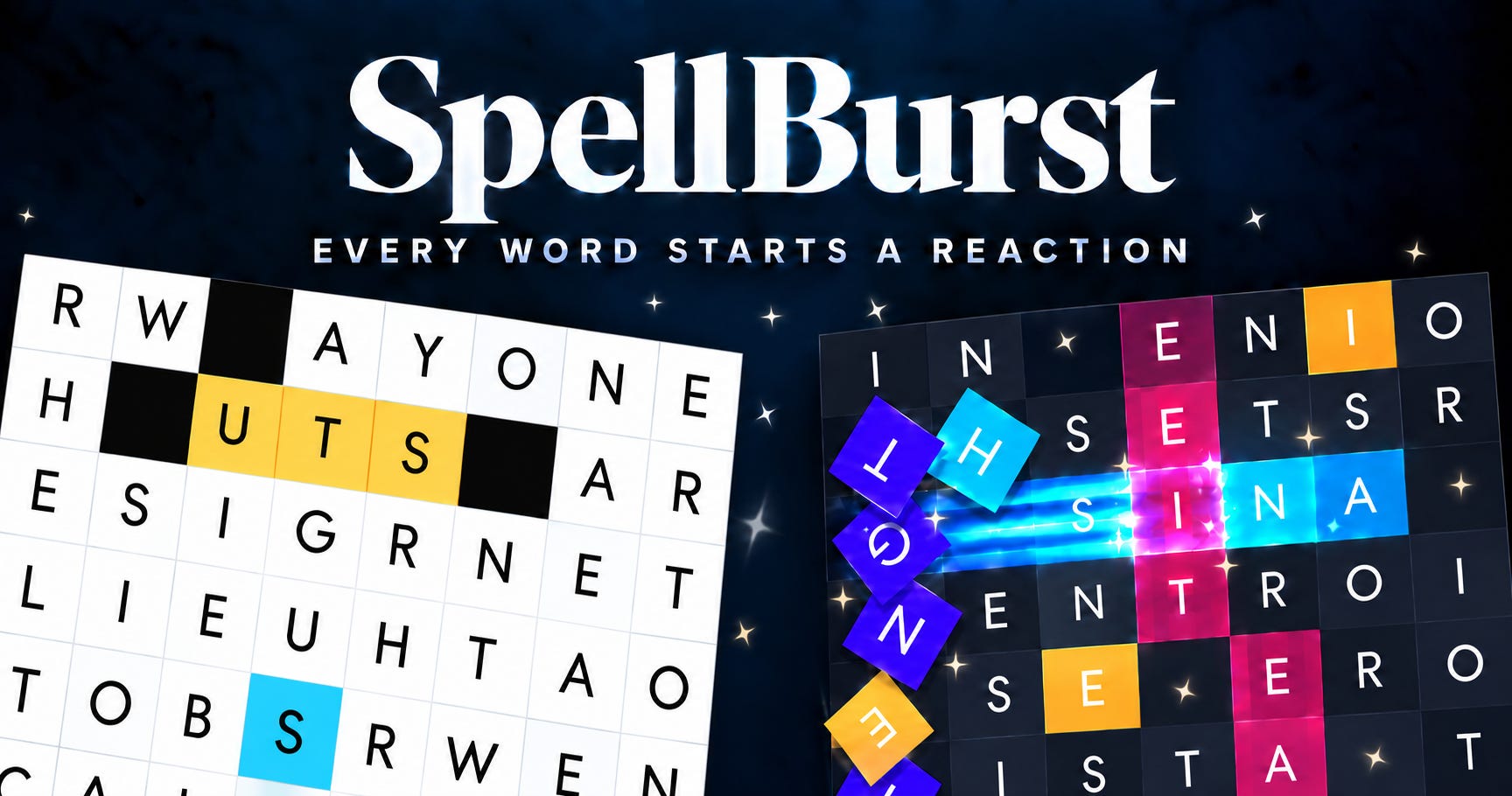
SpellBurst combines SpellTower's word-building with Candy Crush's board and level progression. Longer words create special tiles. Use one in a word, and it fires. Tiles fall, others trigger, and one word becomes a chain reaction.
But finding a word takes more thought than swapping two candies. I designed levels around 15–20 moves. Players were taking roughly a minute per move. That's 15–20 minutes for one level.
With so few players, an A/B test would take too long. Looking at other casual games and research helped me settle on how far to go: 10–13 moves, roughly a third fewer. I made the call Thursday night, October 15, and started Friday.
SpellBurst is at its best when a word sets off something unexpected. Sometimes it’s small; sometimes the whole board erupts. Shorter levels meant fewer chances for that. I wanted people to finish while still wanting more, with enough of those moments to make another level worth playing.
To see whether shorter levels still delivered those moments, I turned to PlayLab, the system I’d built to simulate players of different skill levels across thousands of games per board.
Comparing those games with real play, I found that players triggered special tiles on about 70% of moves. The simulated players did so on roughly half the moves, with fewer, deeper chains.
I’d been measuring a version of the game that didn’t quite match what people were playing.
And the measurements themselves needed work. A longer level could score well for plenty of fireworks overall, even with long stretches where little happened. That wouldn’t tell me whether a shorter level still felt good.
I revised how the simulated players chose words and how PlayLab scored the experience. My Claude level-design skill could then modify a board, simulate thousands of games, keep what improved it, and repeat.
PlayLab also derives the star targets from the simulation data. Keeping the old score targets with fewer moves would make the game harder. Early on, I want people to find their footing.
The shorter levels went live five days after the decision, eight days after launch.
Now I'll watch how many players finish level 1, how many start another, and how many come back the next day.
I don't know yet whether length was why they left. The numbers gave me a reason to look. What to change, and what to preserve, came down to my experience with games and what I enjoy about this one.
I'll report back. In the meantime, try SpellBurst on Google Play and tell me what you think.
👉 SpellBurst